
How the Indiana Pacers Can Win Game 6
If a megaphone counts as a plastic horn, then OKC is in violation of the NBA's Code of Conduct.

Summer break started this week for Chicago Public Schools, so I spent a large part of my day yesterday learning new techniques for Unadvanced Analytics from two different people I admire:
Mike at Basketball Poetry shared some of his industry tips, and
Katie at Basketball Reference showed me some more advanced ways to use their platform.
Kirsten and I are heading to Indiana tomorrow morning to be in town for Game 6, rooting for a Game 7 on Sunday night.
Here’s how the Pacers can stay alive tomorrow evening.
(It’s currently thundering in Chicago. Let that not be an omen that the series is about to end.)
Pascal Siakam: The Playmaker
Indiana has become best known for playing the most successful brand of frenetic basketball since the 7-Seconds-Or-Less Phoenix Suns of the 2000’s. Henry Abbott and Coach Thorpe at TrueHoop have been preaching that their frantic pace wears down opposing teams. (Tom Haberstroh at The Finder argued that Scott Foster’s biggest hindrance on the Pacers was his slowing down of Game 4.)
We’ve grown accustomed to Indiana pinging the ball around the court, side-to-side, reversing court, spacing well and knocking down tough shots.
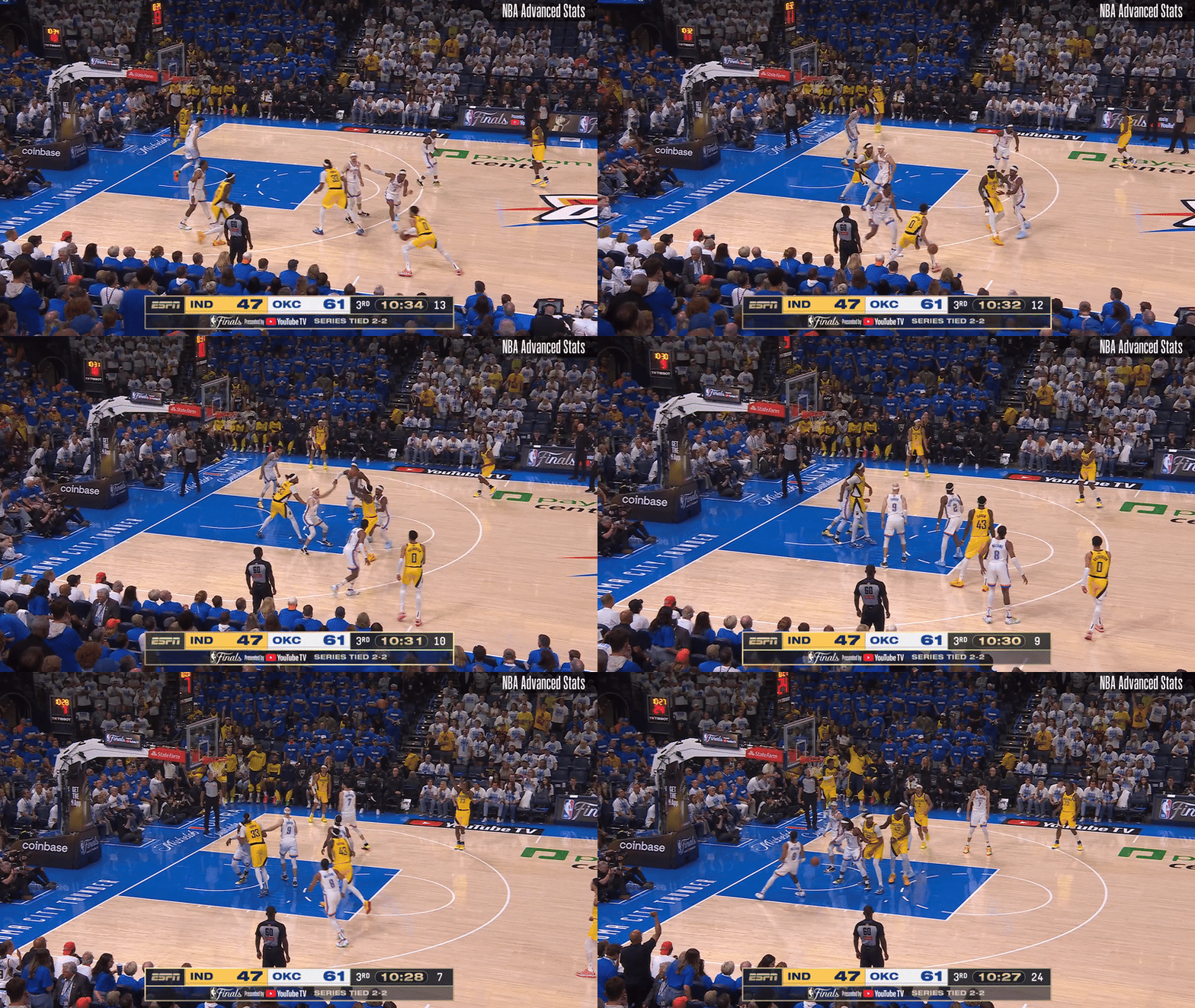
Over the course of the playoffs, we’ve seen them time and again win 50-50 balls and turn them into momentum-swinging plays. The pressure is always on. Ironically, this is how OKC goes on their signature runs, too.
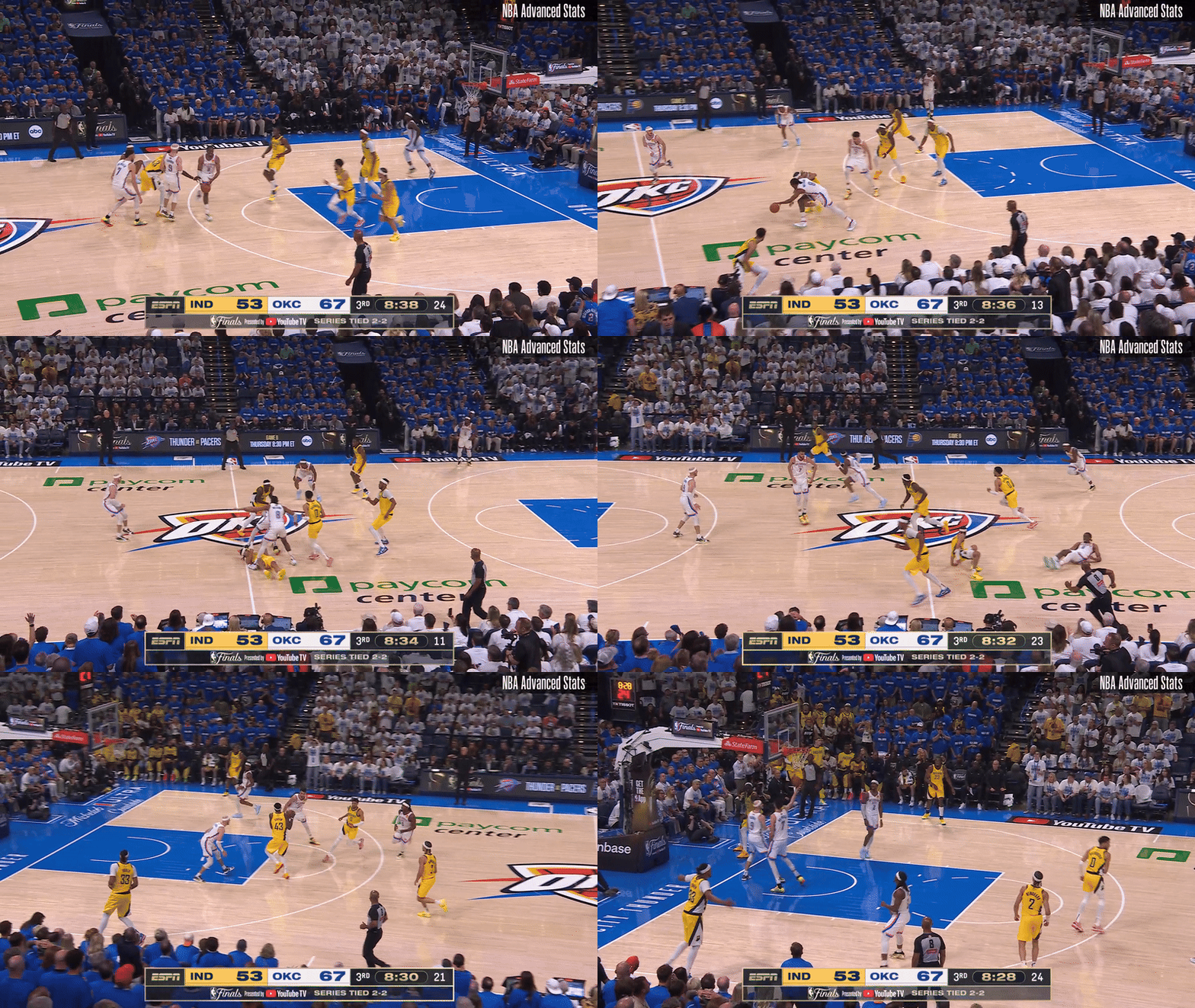
Unfortunately, Tyrese Haliburton seems like he’ll be limited by a strained calf, and I don’t expect him to be able to deliver the same pyrotechnics we’ve become accustomed to. As a result, Indiana is going to have to rely more heavily on Pascal Siakam.
Siakam is not at his best when he catches the ball away from the basket, which is where a smaller guard typically initiates the offense. Instead, he’s at his best when he catches the ball around the elbow or on the free throw line. From here, with his size, speed, and midrange proficiency, Siakam is lethal.
OKC does not like to let Siakam catch the ball here, so they generally make it tough for him on the catch. But if he does get to his spot, he creates mismatch problems for OKC, which leads to advantages for Indiana on other areas of the court. Take this example from Game 5 when Siakam catches the ball at the top of the arc, backs down to the nail, and patiently scans the defense before delivering a timely pass to Andrew Nembhard underneath as soon as the double team comes
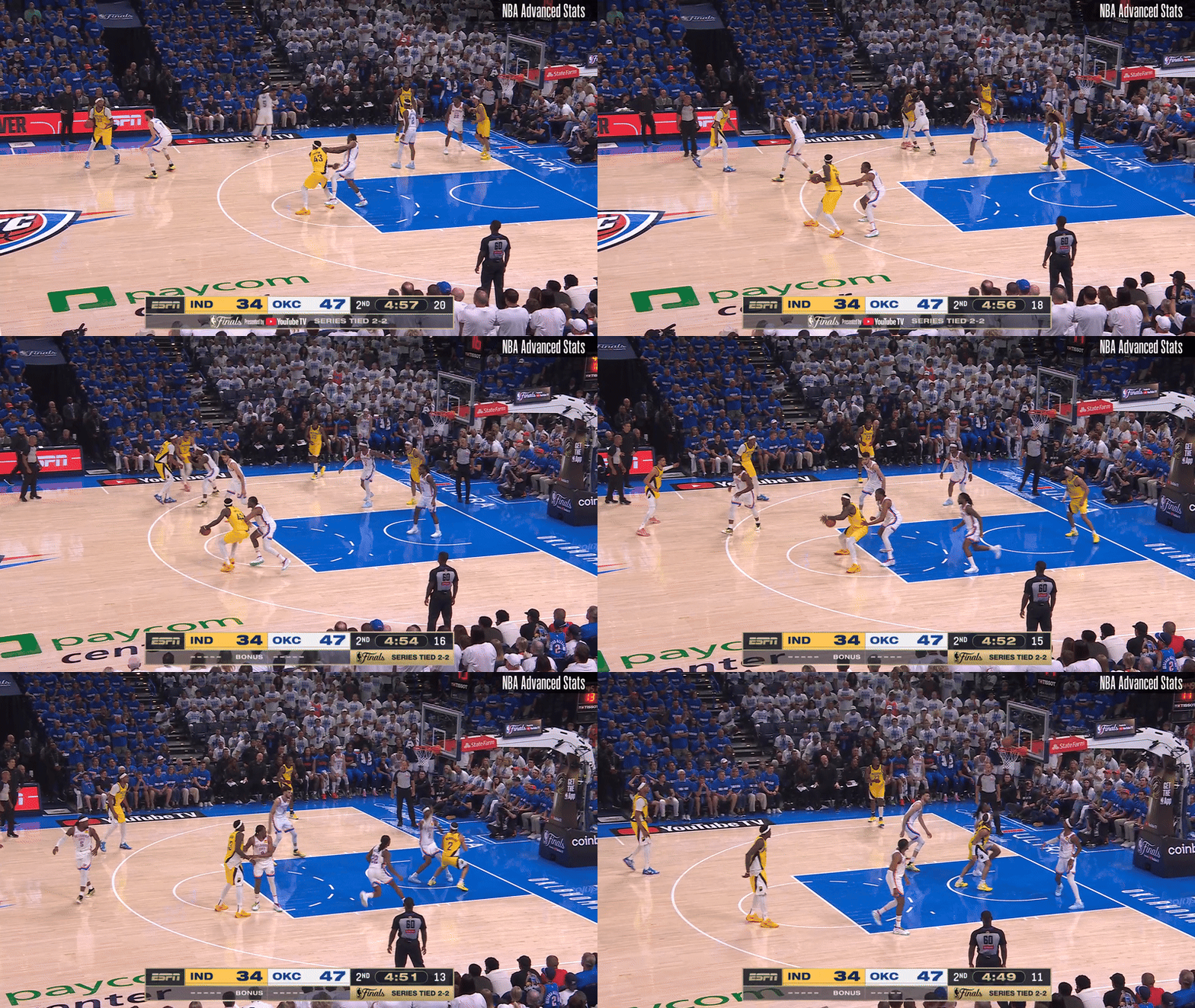
Look for more of this offense from Indiana. Playing fast is what makes them singular, but they are also able to slow down and win games, and that may be what it takes to extend this series.
Myles Turner: Rim Protector
I wrote on Monday night about the steep drop-off from Myles Turner to Tony Bradley. What I think has been lost in the last couple of days of media coverage is how impactful Turner has been for Indiana despite his shooting woes.
Whereas Turner averages 15.6 points on 48% shooting on 11.3 shots per game, he had 13 points on jut 3/5 shooting in Game 5. It was not a good game for him. Most notably has been his lack of trust in his three point shot. Turner shot 5.5 threes per game this season, but after going 0/6 in Game 4, attempted just two of them in Game 5. He looked rattled right from the start, passing up an open look that most spectators had to have thought he was going to shoot.
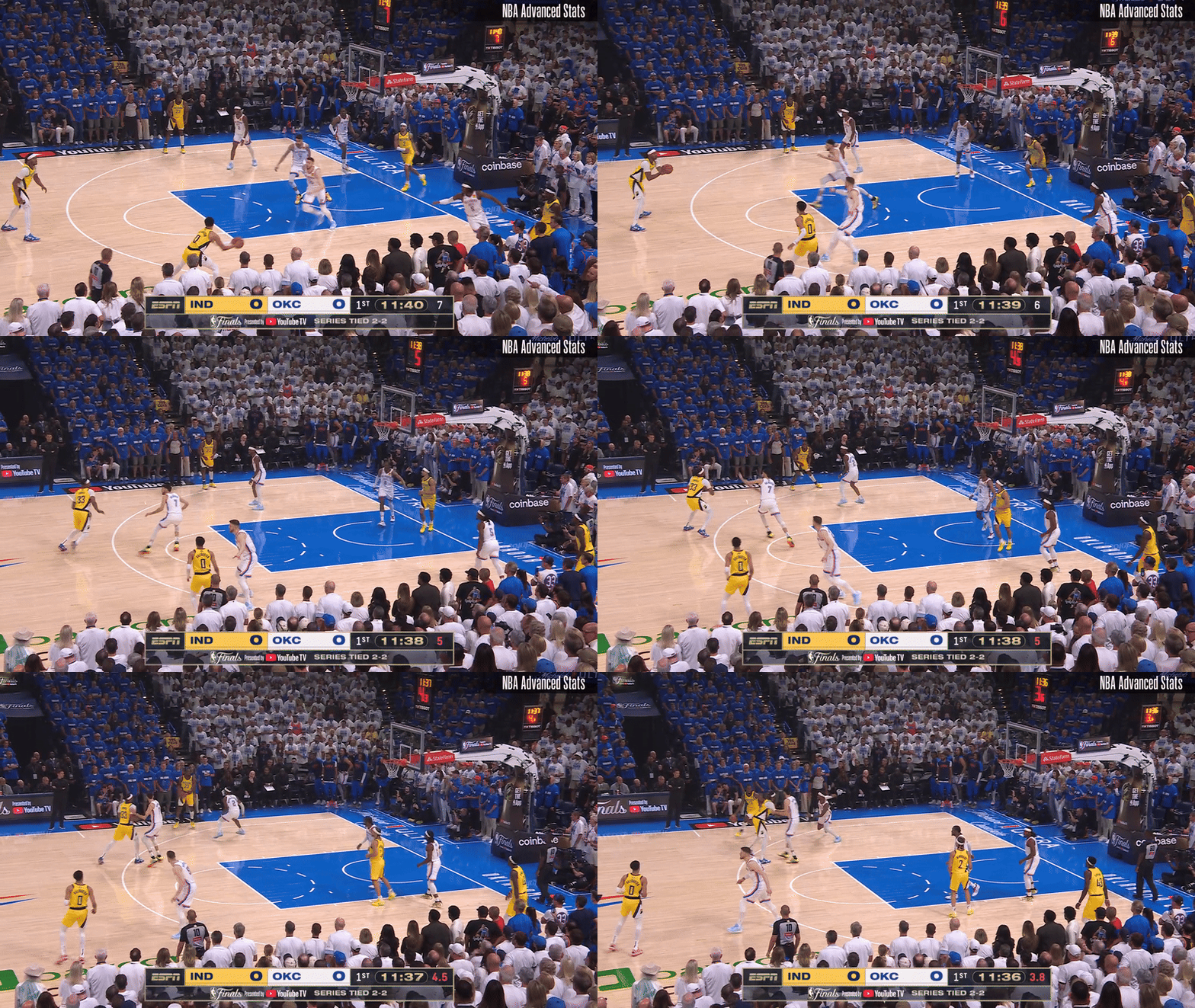
They need him to be better, no doubt. Especially if Haliburton is limited, Indiana might not survive without an explosion from Turner.
But it’s not like he’s been invisible. I think Turner’s defensive impact has been important, especially in limiting Chet Holmgren’s impact on the offensive end. One reason we’re hearing more and more comparisons between MJ/Scottie & SGA/JDub is because Chet hasn’t been playing well enough to draw comparisons to the 2012 OKC Big Three.
Turner has been a big part of why Chet hasn’t been able to get rolling. Holmgren was an efficient scorer this season: he averaged 15 points per game with 5.2 makes on 10.7 shots (49%). But in five games this series, Holmgren has shot 22%, 55%, 40%, 44%, and 27%. Turner is affecting his shots and oftentimes comes up with blocks on OKC’s tallest scorer.
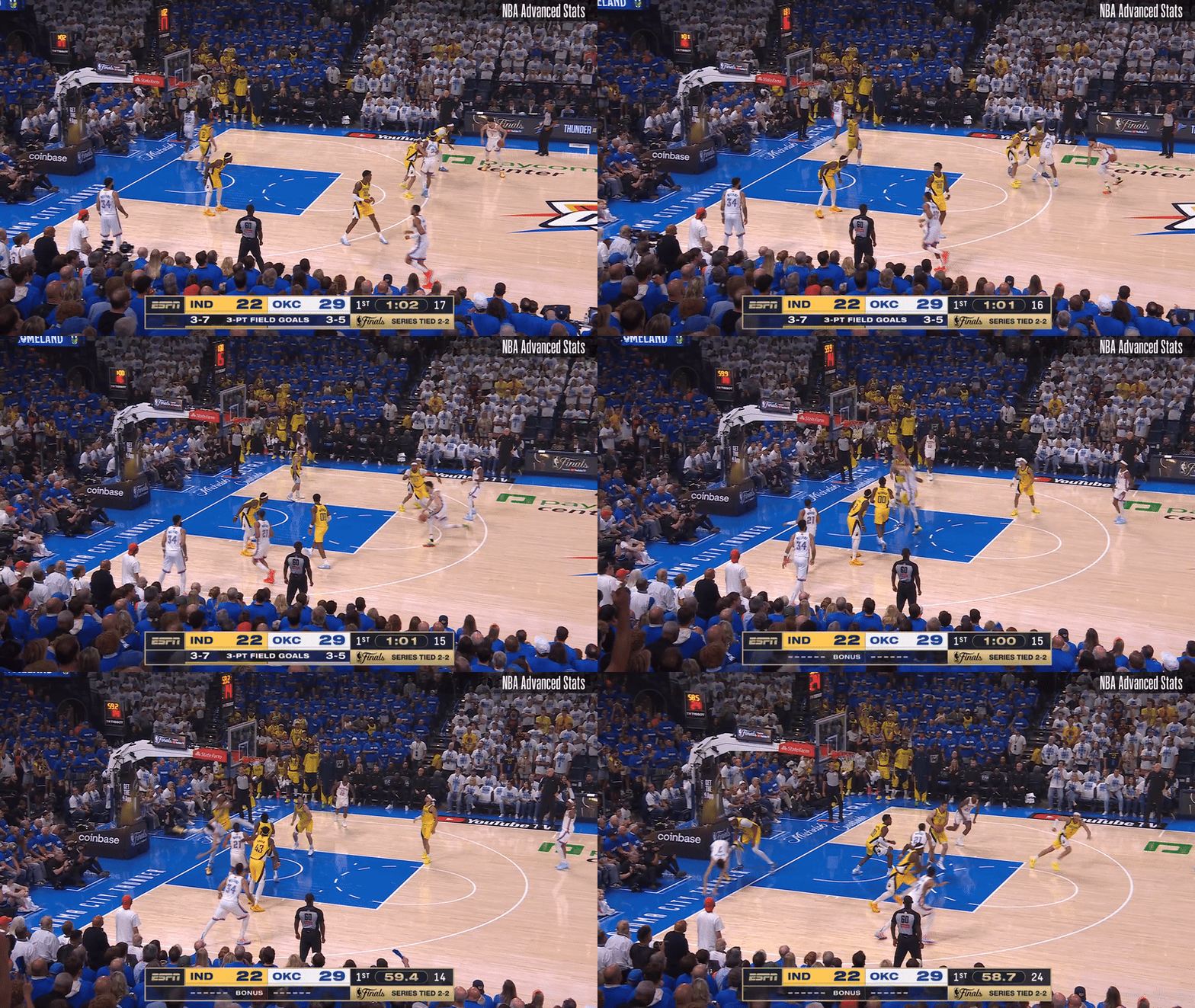
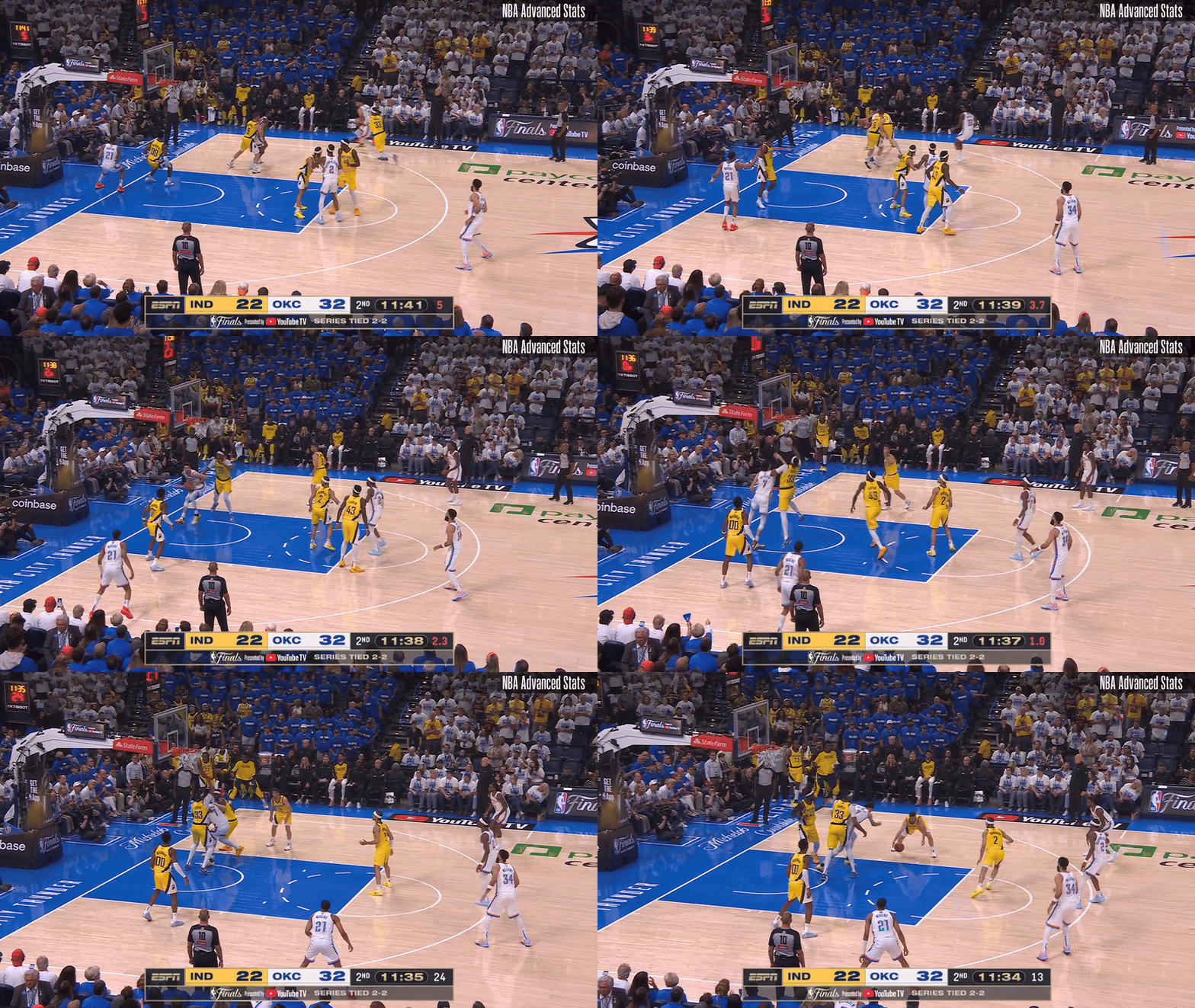
Turner is a 2x NBA Block Champion: in 2018-19 he averaged 2.7 blocks/game; in 2020-2021, he averaged 3.4 blocks/game.
(Unrelatedly, but interestingly, Victor Wembanyama has led the league in blocks in both of his first two seasons, averaging 3.6 and 3.8 blocks/game in those seasons. Plus, he’s currently completing Shaolin training in China. Myles Turner won’t be the NBA Block Champion again, and neither will anyone else until 2040).
Turner definitely needs to turn up the scoring in Game 6, but he has to be aggressive on both ends of the floor for Indiana to stand a chance.
Abuse the Rules
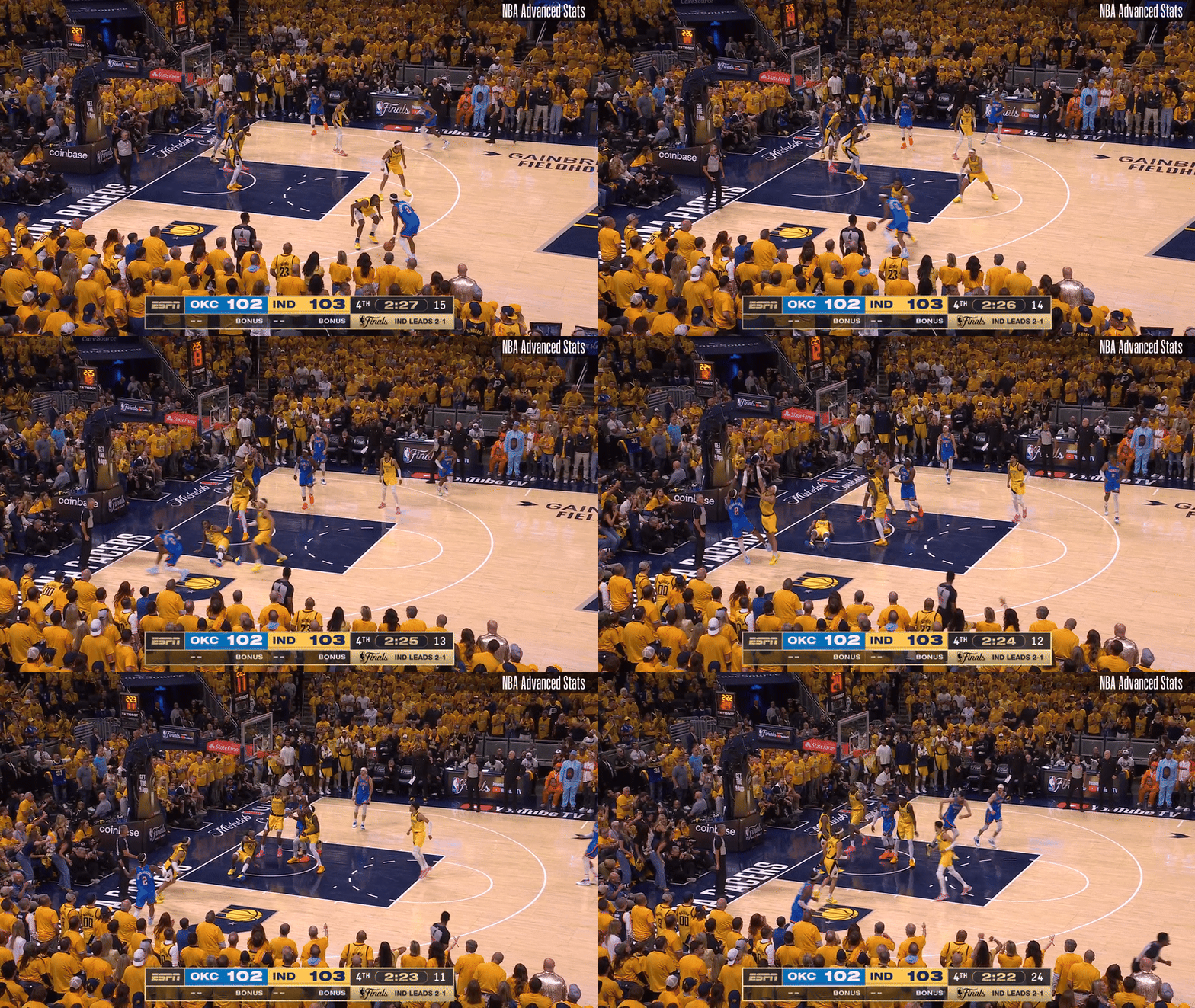
I thought I knew what a travel was, even with the introductions of the gather step and the crab dribble and the Eurostep and all that. That said, two plays during these Finals have seemed like blatant travels to me, but they happened right in front of the referees and weren’t called, so maybe I don’t actually know.
The first was, of course, Shai’s signature shot from Game 4. To me, it looks like a push-off with the off hand three steps.
The second instance was this play from Obi Toppin in Game 5. To me, it looks like a Euro-stop — which is legal, as long as you don’t put your foot back down — before he puts his foot back down, which he then also pivots.
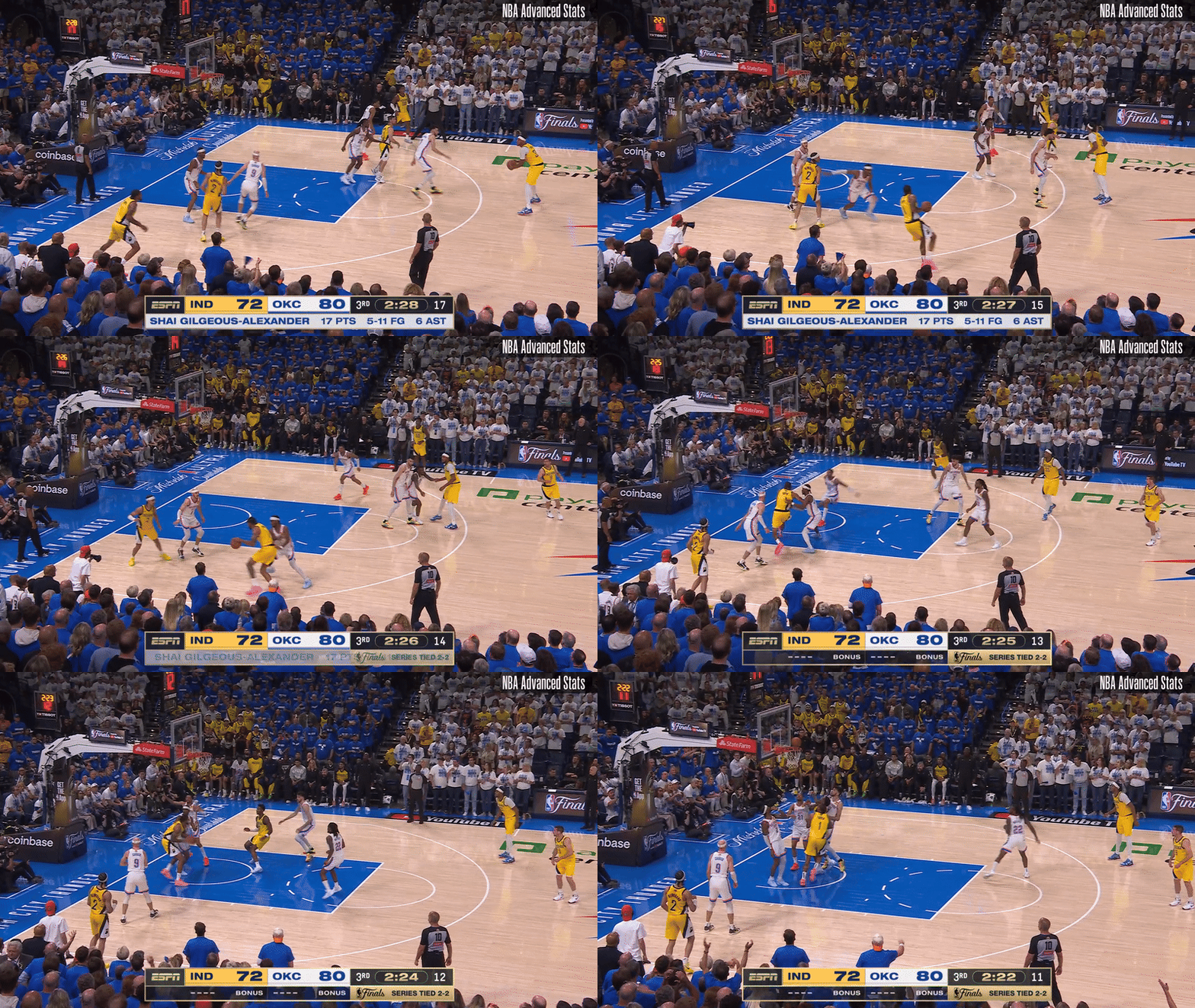
Four steps, right?
So my advice to Indiana is to put pressure on the refs by taking as many steps as possible until they call something a travel.
But wait! There’s more!
The Oklahoma City Thunder are not enforcing the NBA Code of Conduct, and if they aren’t going to be held accountable by the league, then the Indiana Pacers need to break the rules, too.
In Indiana, we’re seeing countless legends sitting courtside; in OKC, the only possible legend would be Nick Collison, and he’s been nowhere to be seen. Instead, OKC is getting notoriety for its vociferous fanbase in matching t-shirts.
OKC is also handing out little clappers for fans, which, from my TV, I thought were something like these:
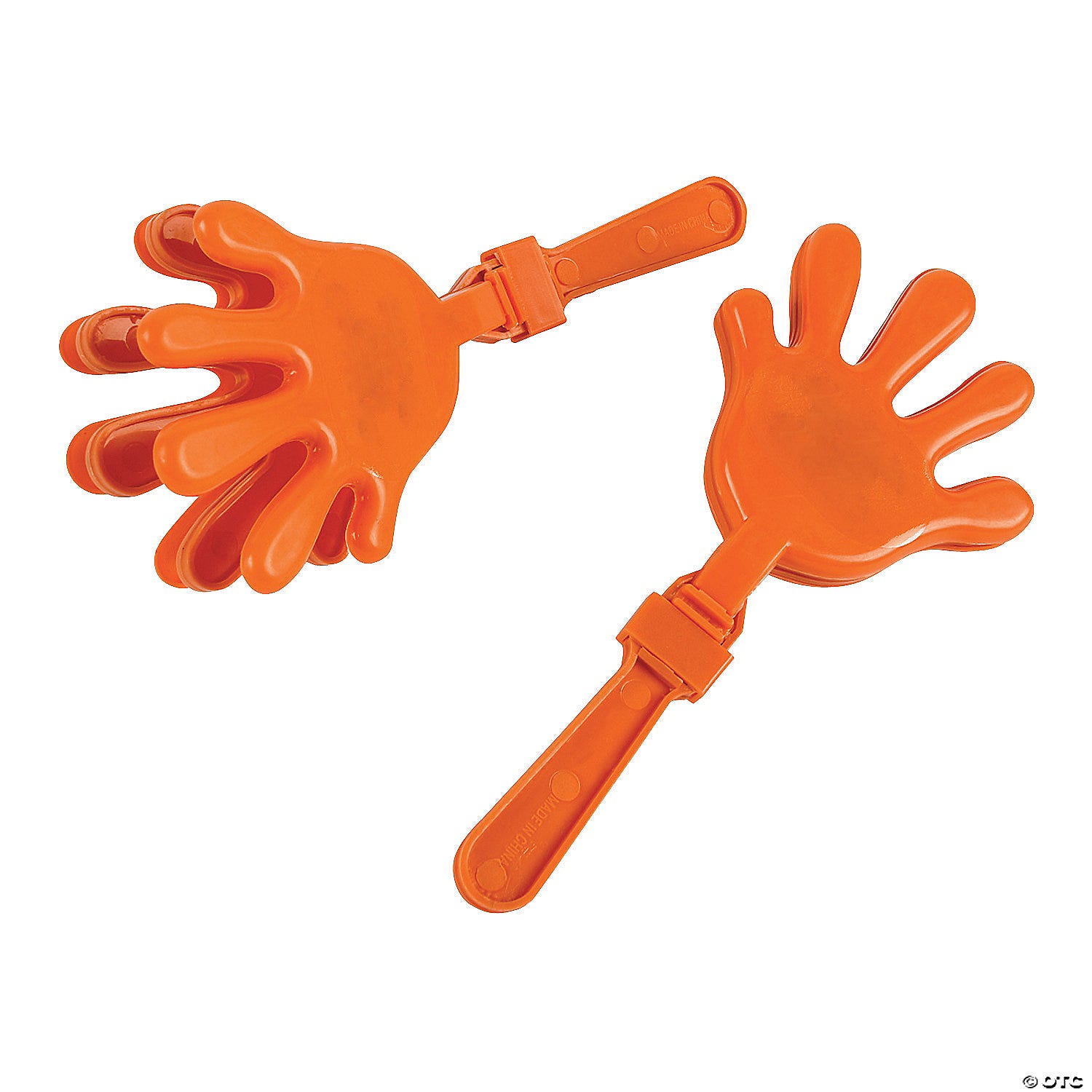
…but after seeing some for sale on eBay, turns out are more like these:
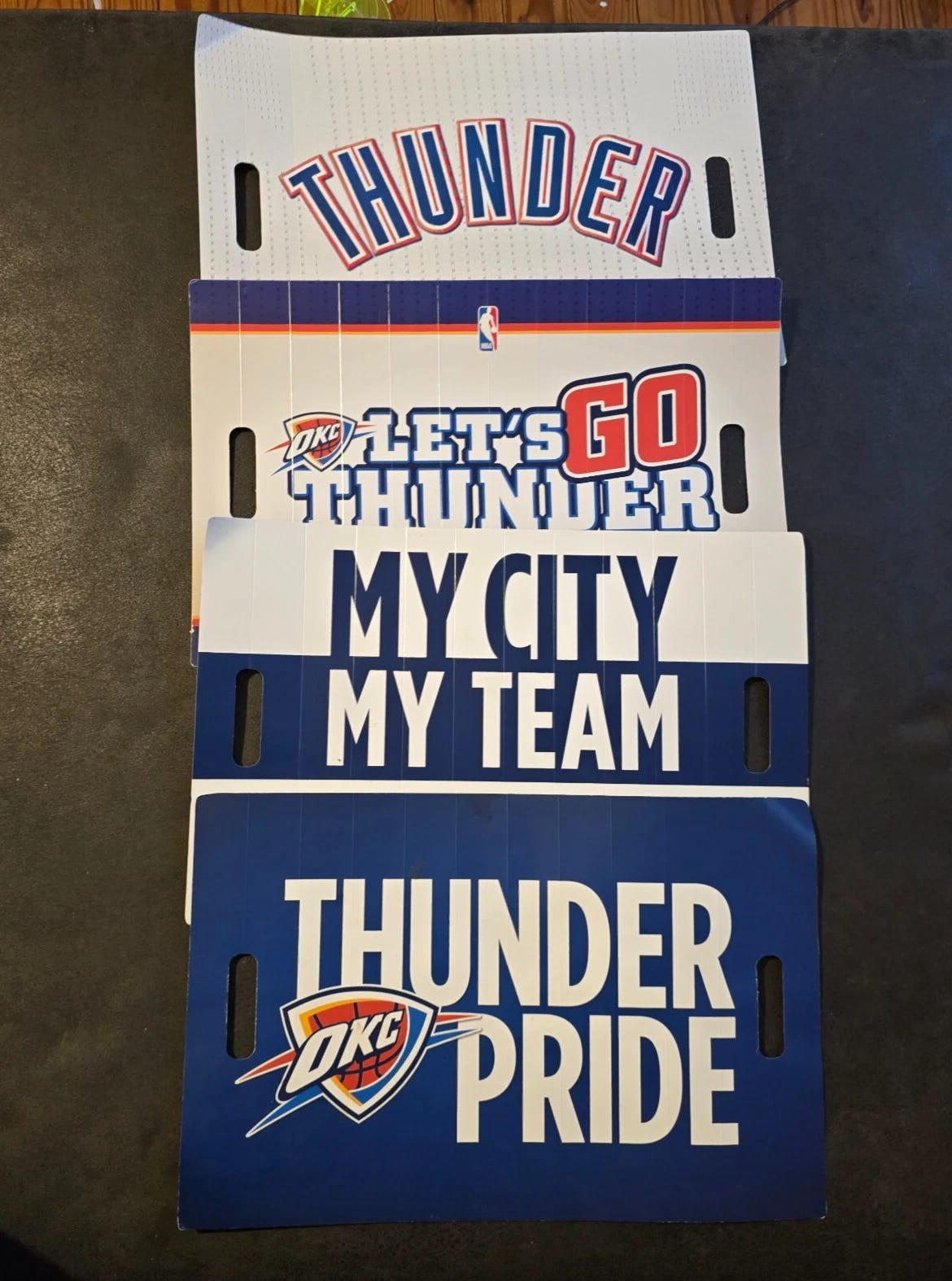
I guess you fold them up and whack them against your hand. You see them doing it pregame when they chant “O-K-C! O-K-C!” and slap their hand with each letter.
Anyway, I thought those things were against the rules, but they’re not.
HOWEVER, what are against the rules are plastic horns. See?
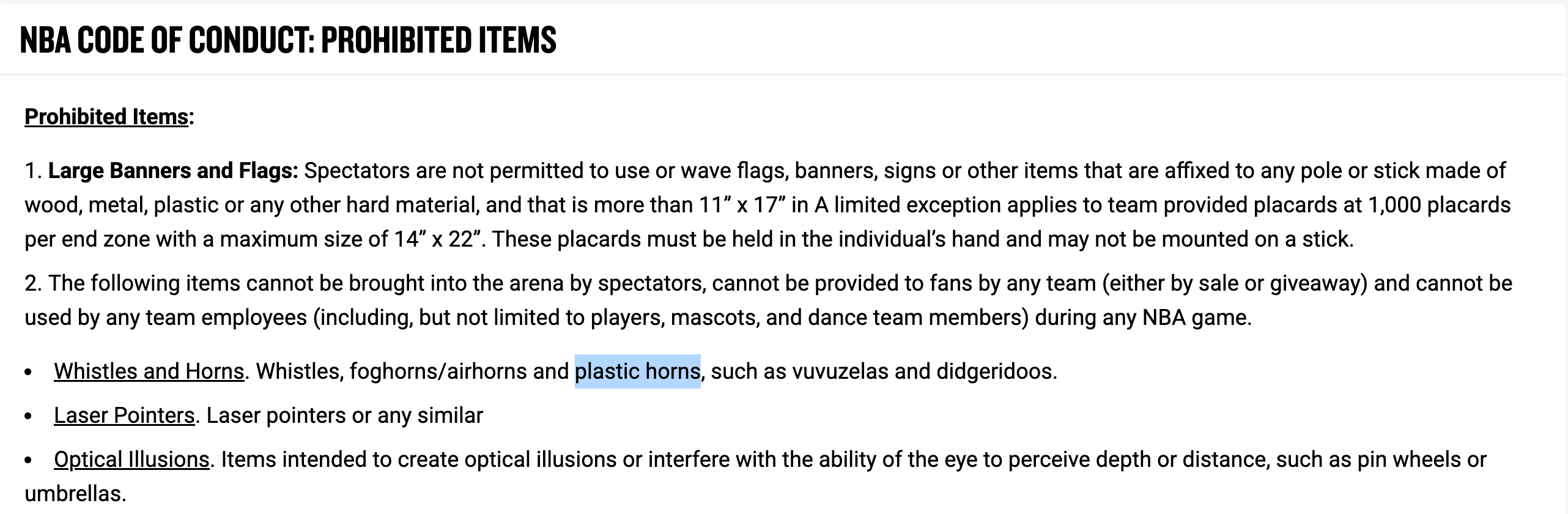
The NBA website specifically mentions vuvuzelas, but not megaphones.
I’m voting that yes, a megaphone is a plastic horn. And unless commissioner Adam Silver disagrees with me, then this courtside OKC fan — who was visible countless times during the second half — is in flagrant contempt of the NBA’s Code of Conduct.
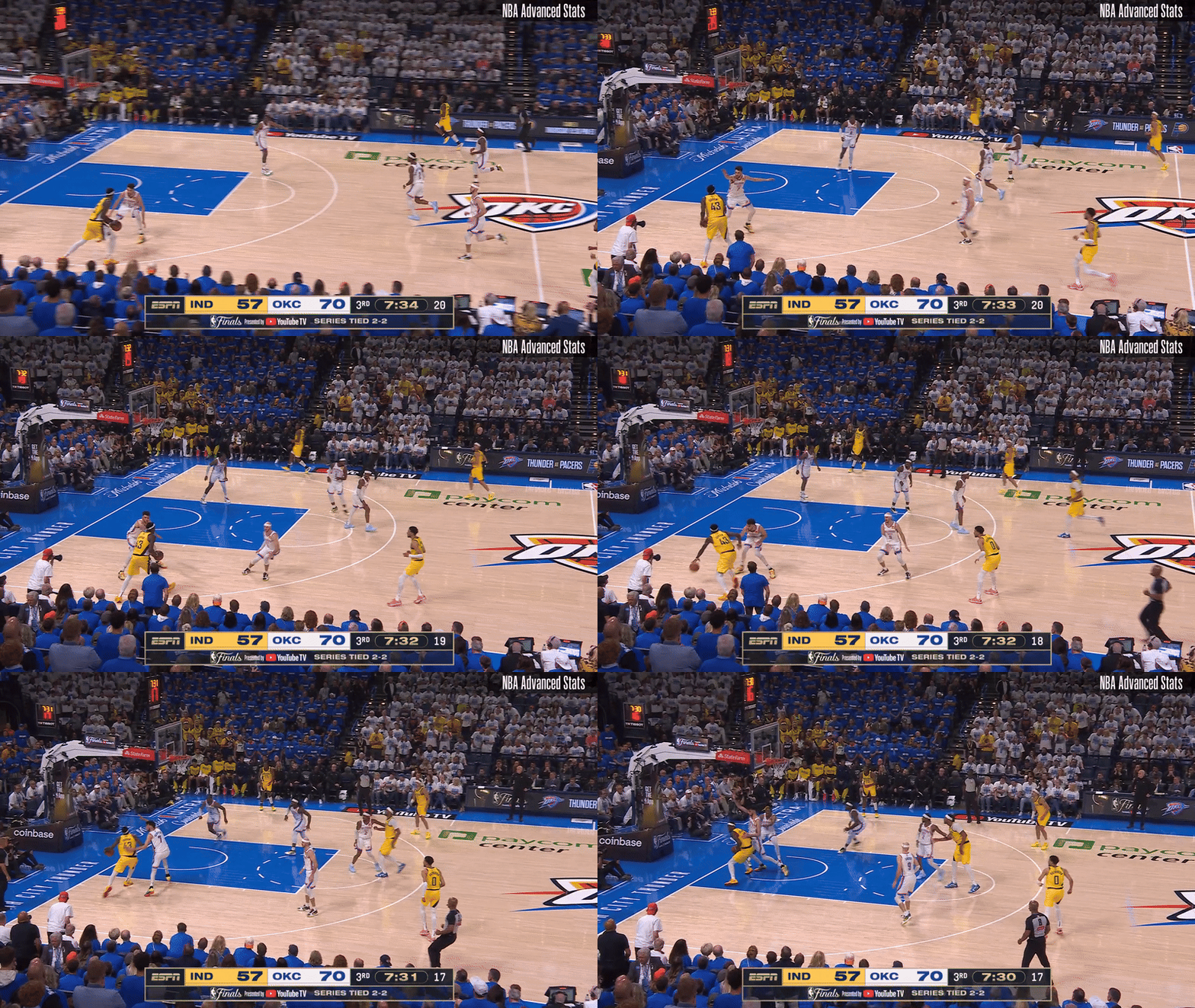
If OKC can do it, then Indiana needs to let anything go. If you’re heading to Gainbridge Fieldhouse for Game 6, bring your umbrellas, your pinwheels, your megaphones, and your didgeridoos.
We need a Game 7.
All bets are off.
We just had a storm go through the Indy area… plenty of downed branches for everyone to make/find their own didgeridoo :)